

The European Commission has withdrawn its AI Liability Directive, a move that has sparked debate over AI accountability and regulatory simplification. Originally proposed in 2022, the directive aimed to modernize EU liability laws by addressing legal gaps created by AI-driven decision-making. It sought to ensure that individuals harmed by AI systems could seek redress through a streamlined legal process, introducing a rebuttable presumption of causality and requiring AI developers and operators to disclose relevant evidence in liability cases.
Understanding the AI Liability Directive
The directive was designed to complement the AI Act, which primarily focuses on risk prevention and compliance obligations for AI developers. Unlike the AI Act, the AI Liability Directive would have provided an ex post legal mechanism, ensuring that victims of AI-related harm—such as discrimination, safety failures, or algorithmic bias—could hold AI operators accountable. By shifting of the burden of proof onto AI system providers, the directive aimed to reduce the legal complexity surrounding AI-related damages.
Key provisions included:
- Presumption of Causality: Victims would not need to fully prove causality between AI actions and harm but could rely on a legal presumption, making it easier to bring claims.
- Disclosure Requirements: Courts could order AI system operators to provide technical information necessary for establishing liability.
- Harmonization Across the EU: The directive sought to prevent legal fragmentation by ensuring that AI liability rules were consistent across all member states.
The Product Liability Directive and Its Role
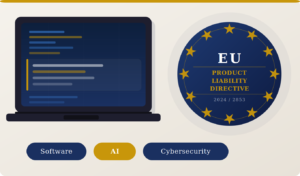
While the AI Liability Directive has been withdrawn, the Product Liability Directive (PLD) remains under consideration. The revised PLD modernizes existing product liability laws, extending strict liability to AI-powered products and software. Like the AI Liability Directive, it aims to address challenges posed by AI-related harm, ensuring that victims have a legal path to compensation.
Similarities between the two directives include:
- Liability for Defective AI Products: The PLD, like the AI Liability Directive, ensures that manufacturers of AI-driven systems can be held accountable for damages caused by defective AI products.
- Easing the Burden of Proof: The revised PLD introduces a rebuttable presumption of defectiveness for AI products, making it easier for consumers to establish liability—an approach similar to the presumption of causality in the AI Liability Directive.
- Disclosure of Evidence: Under both frameworks, companies may be required to disclose technical information to assist claimants in proving fault or defect.
Why Was the proposed Directive Withdrawn?
The decision, announced in the Commission’s 2025 work program, reflects a broader shift toward deregulation to foster innovation. The AI Action Summit in Paris (February 10-11) underscored these priorities, with U.S. Vice President JD Vance criticizing the EU’s stringent tech regulations. Scrapping the directive signals an openness to investment and aligns with European Commission President Ursula von der Leyen’s push to “cut red tape.”
Additionally, the directive was losing momentum, particularly following the adoption of the AI Act. Some policymakers viewed it as redundant, arguing that AI liability could be addressed through existing national legal frameworks or through the revised Product Liability Directive (PLD), which was already under consideration.
Industry Pushback and Regulatory Overlap
Opponents of the AI Liability Directive, including major tech companies and industry groups, argued that the directive would create excessive regulatory burdens, stifling innovation and discouraging investment in AI technologies. They contended that existing national liability laws, combined with the AI Act and the revised PLD, already provided sufficient legal protections for consumers. These stakeholders welcomed the withdrawal as a necessary step toward reducing legal uncertainty and avoiding unnecessary duplication of liability rules.
On the other hand, supporters of the directive, including consumer rights organizations and several EU lawmakers, argued that its withdrawal weakens accountability for AI developers. They maintained that the proposed directive was essential for protecting individuals against AI-related harm, particularly in cases of algorithmic bias, automated decision-making, and safety failures. Critics of the withdrawal warn that without a dedicated AI liability framework, enforcement may become inconsistent across member states, making it harder for victims to seek redress.
Broader Implications
The move highlights ongoing tensions within the EU’s digital regulatory landscape. While some, like the Computer & Communications Industry Association (CCIA) Europe, welcomed the decision as a step toward regulatory simplification, others warn that deregulation may lead to inconsistent enforcement across member states, making compliance more challenging, especially for SMEs.
The withdrawal also underscores a strategic recalibration by the EU, potentially prioritizing AI innovation over stringent liability measures. This decision may influence global AI regulatory trends, as other jurisdictions observe whether a lighter regulatory touch fosters competitiveness or leads to increased legal uncertainty.
What’s Next for AI Liability?
The Commission has left the door open for future liability discussions. Alternatives include expanding the Product Liability Directive to encompass AI-related harm or developing a broader software liability framework. As AI continues to advance, the EU must strike a balance between fostering innovation and ensuring accountability, determining whether this withdrawal is a temporary shift or a lasting change in AI governance.
Author:
 Angelina Patsalidou
Trainee Lawyer